
 Where did the time go? This is my blushing bride from June 1978. We were moving into our first apartment after the wedding.
Babe, I’d do it all over again in a heartbeat.
Where did the time go? This is my blushing bride from June 1978. We were moving into our first apartment after the wedding.
Babe, I’d do it all over again in a heartbeat.
 This is the oldest family photo I could find, from Christmas 1959. It’s my dad and mom, me and my sister. In my memories, this would be somewhere around Farmington, NM and I was about 3 years old. The dog was name “Moe,” and was a short time later run over out on the highway.
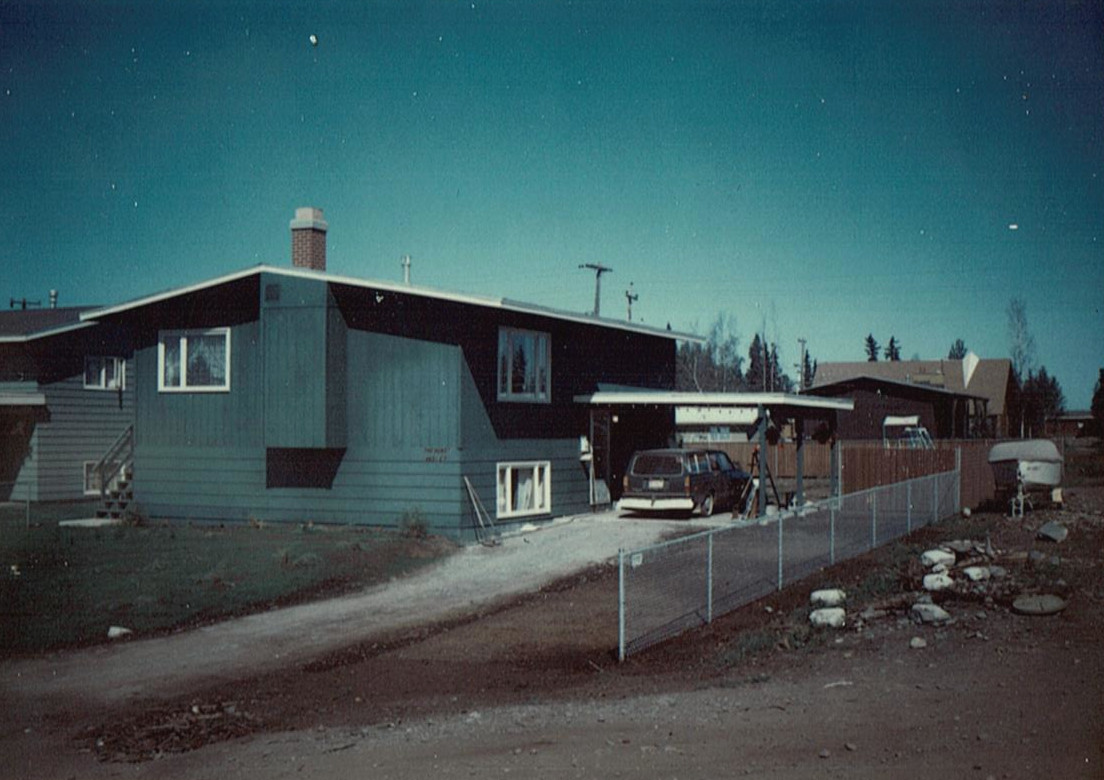 The first new home my parents actually bought was in Anchorage, AK. After checking the maps extensively, this is apparently no longer there. This picture was taken right after we moved into the place. Yeah, we moved a lot in childhood until we got to Anchorage. This was the first place I can remember staying three years.
 This was the last bike I bought in Europe, and the last iteration of my attempts to make it easier to carry enough water. That’s six 2-liter bottles standing in a rack made from plastic conduit, mounted on a regular bike rack. This was taken in Viborg, DK on a very hot summer day in 1992.
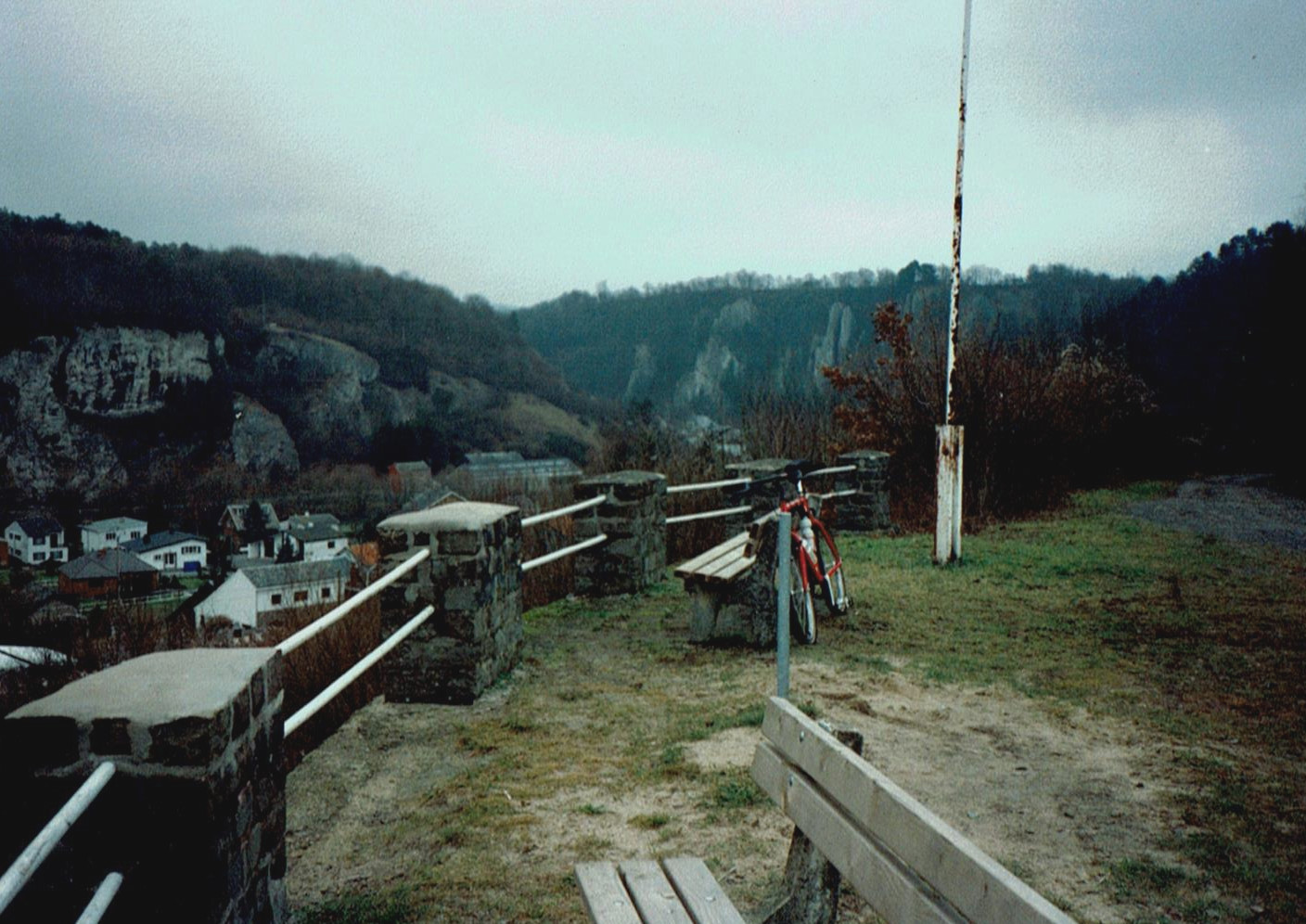 I also took a few solitary bike trips just to explore some of the more beautiful areas I saw while volksmarching. That’s the same bike in both photos. This was a bike trip from Comblain-au-Pont in the late fall of 1991. I can recall riding up a steep winding road to reach this cliff above the town, then riding around on the ridge and taking a trail down that ran me through the stream bed a few times. That was exciting.
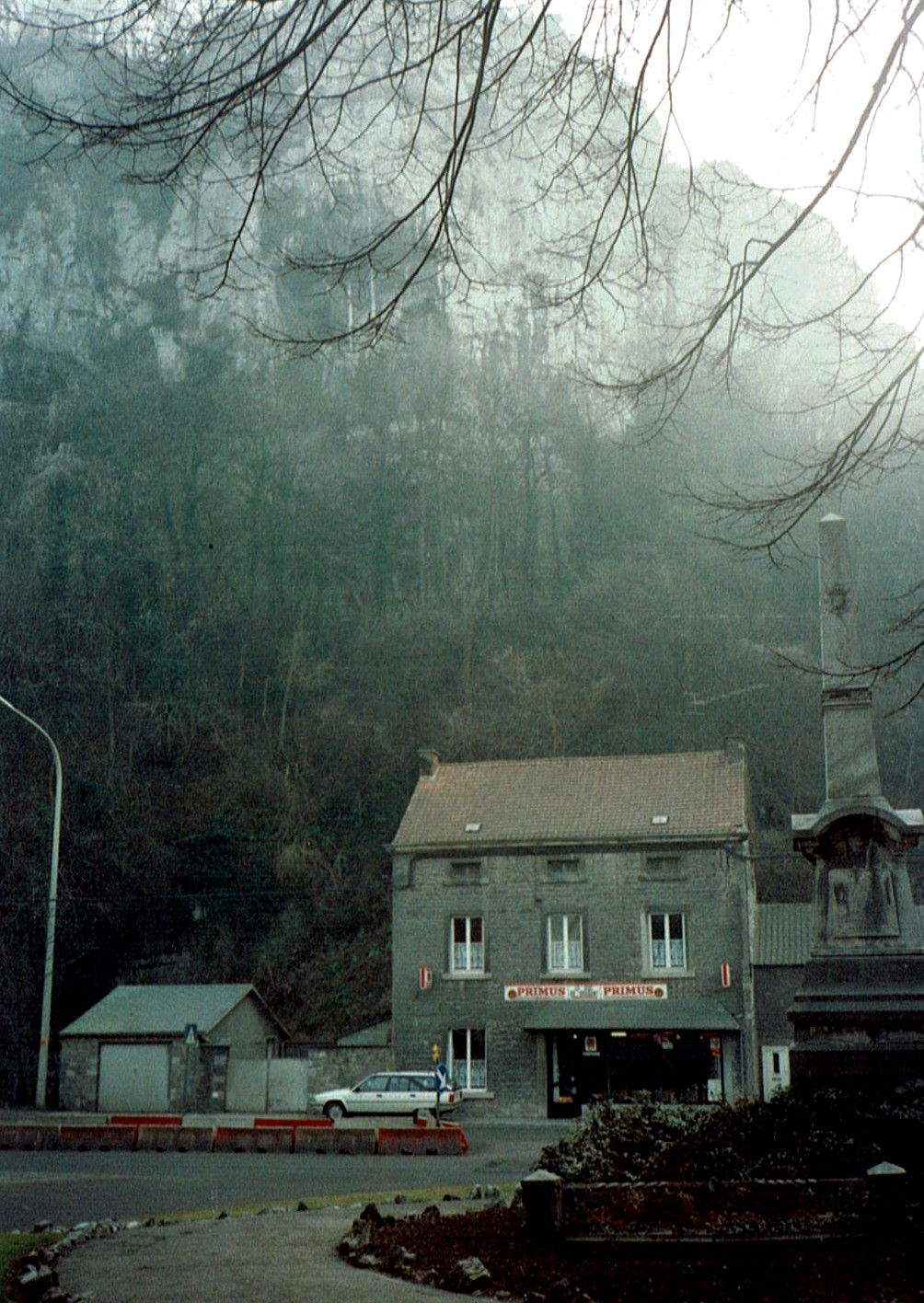 On one of my last trips to the Dinant area of Belgium, I took this shot in February 1992. I thought it came out well with the low fog not quite obscuring the stone cliffs above the buildings.
While I haven’t shown you all of the photos I scanned, the scanning is pretty much done. Now I’ve migrated that computer over to Xubuntu Linux 19.04. I was waiting until I had gone through our huge stack of photos because scanning is a little simpler under Windows. I tolerated the way Windows does so very much without giving you a clue what’s going on in the background, and waited to be sure the Linux drivers were ready for this recent hardware. Windows gives me the willies, though I still have to know how to make it work for my tech support ministry clients.
The Feast of Dedication is early December on our calendar. Everyone in Jerusalem was wearing their winter garb. As Jesus walked in Solomon’s Portico, a bunch of scribes and Pharisees surrounded Jesus and demanded He state plainly whether He was the Messiah.
Jesus said it didn’t matter what He said, because they refused to believe Him. Then He pointed out the one thing they refused to consider: His miracles were clearly consistent with the Covenant. They were commissioned by the Father. These men were incapable of believing those miracles because their hearts were closed; they were not committed to God’s Word but to something else. They couldn’t receive the obvious truth because they didn’t belong to God or to the Messiah.
But the sheep His Father gave Him would always recognize His voice as the voice of God. They belonged to Eternity and no one could take that away from them. More to the point, they belonged to Jesus as the Messiah, a gift from His Father, and no one had authority or power to take them from the Father’s hands.
Then Jesus said flatly that He and the Father were One. Someone listening would have to wonder just what those Jews would have accepted as evidence of that claim. Since Jesus was not one of them, He couldn’t be from the God they knew, but Jesus’ whole point was that they didn’t know Jehovah in the first place. At any rate, they took up stones in preparation for striking Him.
He asked them for which miraculous work were they going to stone Him. They said it was not about the miracles, but what they considered His blasphemy. Specifically, He made Himself out to be God. So using their own rules of logic, He quoted Psalm 82:6 where David quotes God saying that He had made the nation of Israel like gods among the rest of the nations of the earth. He did this by giving them His own Word, but so many had rejected it. It was a psalm of pleading for justice against those who rejected the revelation of God, the same problem Jesus noted with the Pharisees and scribes.
The Scripture cannot be broken, but if the nation breaks away from it, they lose the blessings of the Covenant. How painfully obvious it was they rejected the One whom God sent to them as the Living Word because they didn’t recognize the truth in the first place. Claiming to be a Child of God was the birthright of anyone born under the Covenant in the first place, so why was it a crime for Jesus to claim that honor? If His miracles led people away from the Scriptures, then they rightly rejected Him. But if His miracles were clearly in accordance with the Covenant, then never mind His words. They should believe in the blessings of the Covenant, and thus recognize that the Father was in Him, and He in the Father.
They tried again to seize Him, but it was not His time yet.
 Amersfoort in the Netherlands is a really ancient city. It has a canal running right through the old city center. Up on the northwest side of the old city, they managed to preserve this gate, partly from the Middle Ages, if I understand correctly. Yes, the weather is overcast and gray like this most of the year in the Benelux.
 Outside of the big city of Heerlen, on the southwest side stands the tiny village of Imstenrade. These days it consists mostly of the old manor, referred to as “the Villa” around there. I seem to recall it has rooms to rent and a really fancy restaurant.
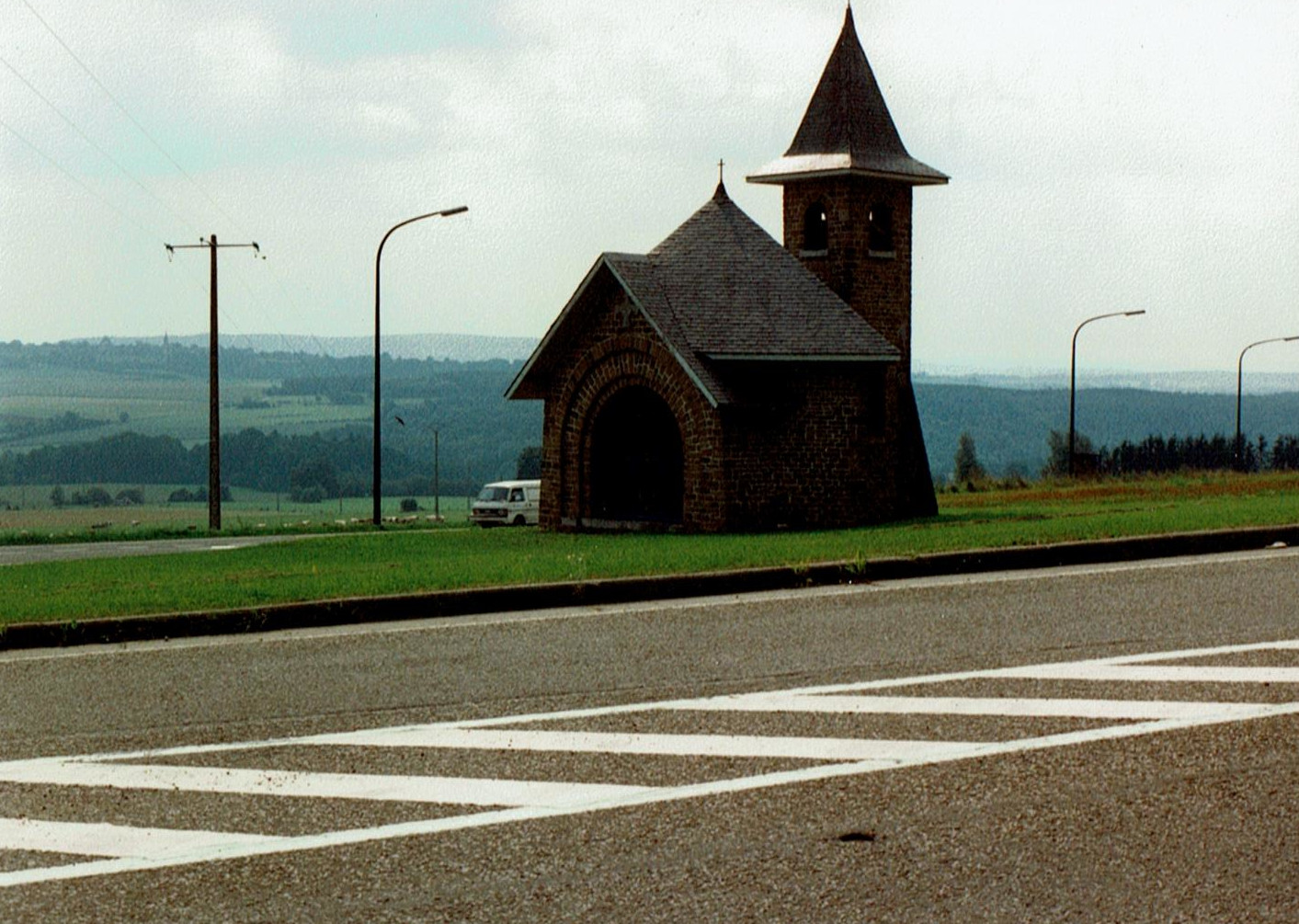 Any hiking around Malmedy, Belgium is lovely. The whole area is one big series of valleys and some fairly steep hills. It’s also an intensely Catholic region, as attested by this tiny prayer chapel standing at a crossroads near Comblain-au-Pont.
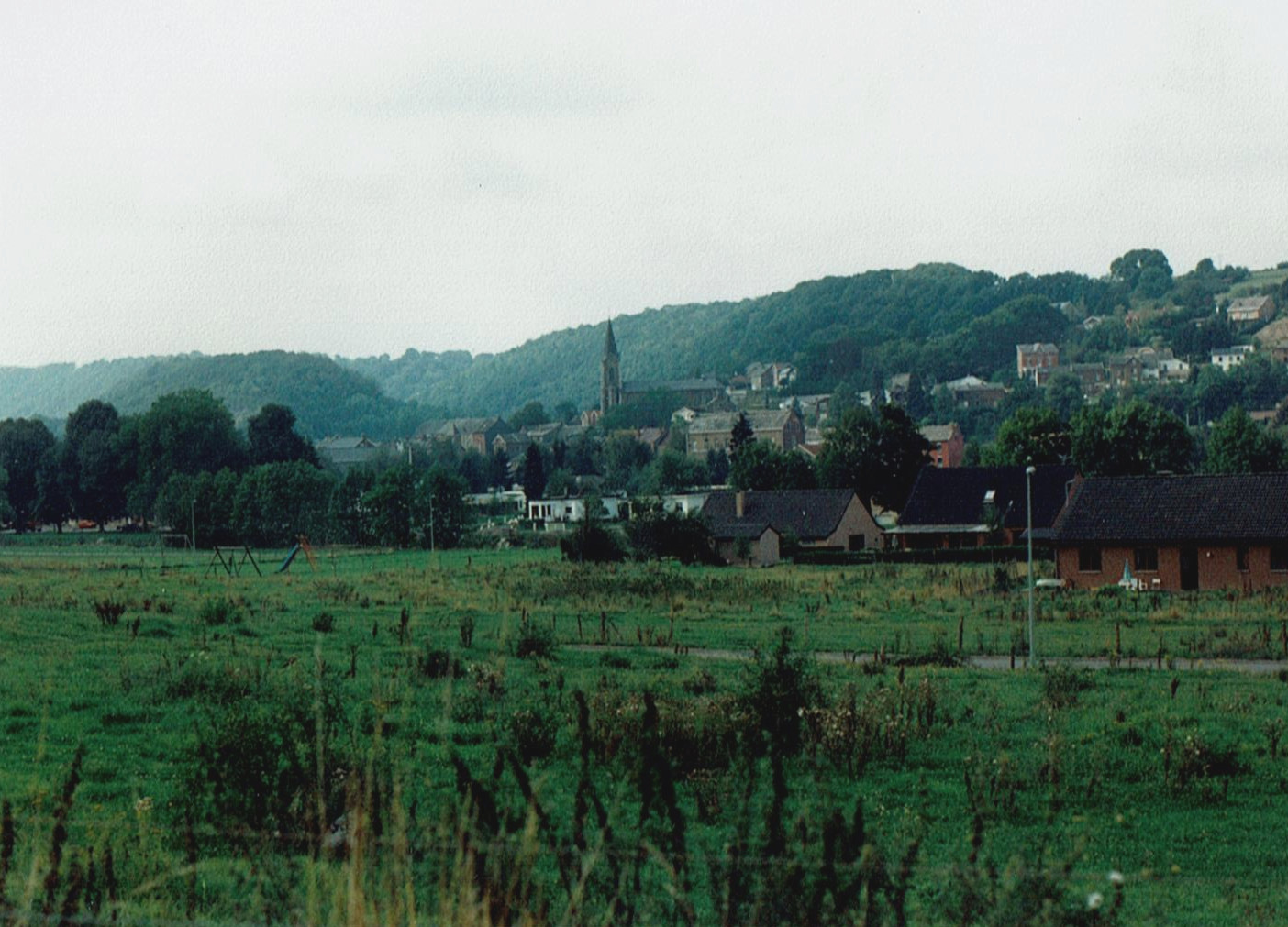 In the same region is the village of Hamoir. This was our view hiking into the village. The route turned up into the hills behind it, of course.
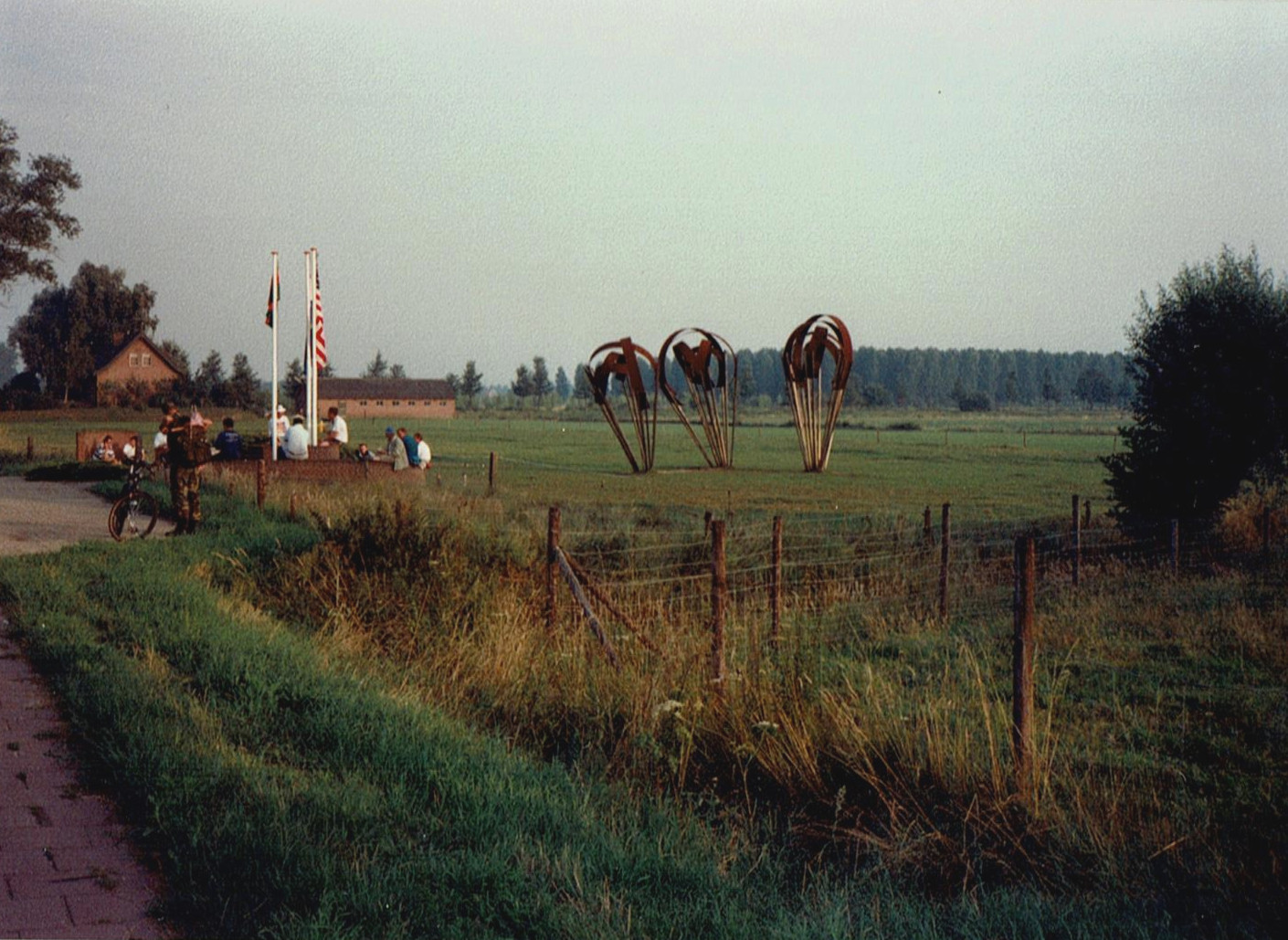 Some of you may know that Nijmegen was the scene of a major battle in WW2. Off to the southeast stands a rather high plateau where the small town of Groesbeek is situated. There are monuments and graveyards all around that town, but this one is particularly poignant, because it portrays the paratroopers as buried in the ground. Some were shot up by German forces before they hit the ground. It was late in the day when this photo was taken.
In our heart-led path, we have the full assurance all truth is already active within our convictions, but a lot of head knowledge arising from that isn’t triggered until someone or something provokes the right question. That’s how it works for us. We each will have our own answers to some questions, but there is often a broad agreement between us. This is how we decide to associate with each other, to form an online parish of like faith and practice.
Some comments surrounding the publication of the most recent book, and the series posted here that made up the book, have provoked some contemplation. I sense the need to explain some things just so the folks who support this ministry can understand the concrete reality that is implied by our shared convictions.
Radix Fidem is a little too esoteric for most folks. Private communication confirms that again and again. We will see growth, but only from a thin slice of humanity. It’s not that we are so elite, though some of us joke about that, but that we share a certain odd outlook that most of the world will never understand. But that doesn’t mean we can’t understand the rest of the world and what motivates them. I went into that series trying to reach a broader audience than the folks who tend to join themselves to this virtual parish. It’s our curriculum for outsiders.
Nothing about Radix Fidem lends itself to institutional growth. That’s simply not a part of our ministry here. We are sacrificial in that sense; we don’t expect much pay-back. If a return on investment is what drives you, this is not the right place for you. The very act of trying to define what we really need from religion means that we have an awareness that most folks don’t need the same thing. We are called by God to help those who would never join us.
The best gift we can give them is the heart-led sense of awareness about faith itself. The book tries to point the way to what it means to be committed from the heart, and it includes a heavy dose of Biblical Law — the sense of organic continuity between law and faith, versus the strict binary approach of Western heritage. But if they only thing they see is that first section on the importance of the heart as the seat of the faith, we have won the biggest battle. God can nudge them toward His divine character any way He likes after that.
The same Holy Spirit can help you discern when you have encountered someone who is ready for our covenant of Radix Fidem, so it’s not like I’m suggesting you keep that a secret. But you should realize that, for most of the world out there, that’s just too much too soon. We aren’t exactly reticent, but we are sparing them the shock of moving that far all at once. It’s far better for us as a covenant community that we attract only the few whom God designed and shaped like this. We should be looking to help folks find their own path. The world needs Jesus, not you and me.
 The book is now published at Smashwords: The Heart of Biblical Living. As usual, I have my own copies in Word, LibreOffice and PDF. The cover art is an old Harold Copping painting, “The Temptation of Christ.”
Keep mind the context here: We assume an effort to embrace the Biblical Covenant of Christ. Faith is the extension of Law Covenants, the goal of law teaching.
Ideally, a man knows that his family household is his greatest treasure. He will act accordingly, and make it clear he thinks that way. He will ensure the world knows it, too.
A woman knows that her man’s public reputation is one of her greatest treasures. She will promote him in social circles, and would rather die than be caught cutting him down.
These things are part of shalom; it’s how we show respect for God and His ways.
 Here are my munchkins cavorting on remnants of the Siegfried Line in the Wurm Valley near Herzogenrath, Germany. The daughter is trying to get the dog to sit down and look at me, but that was pointless. The dog was an excellent hiking partner, seldom tiring on even the longest walks. But she never could sit still for much of anything.
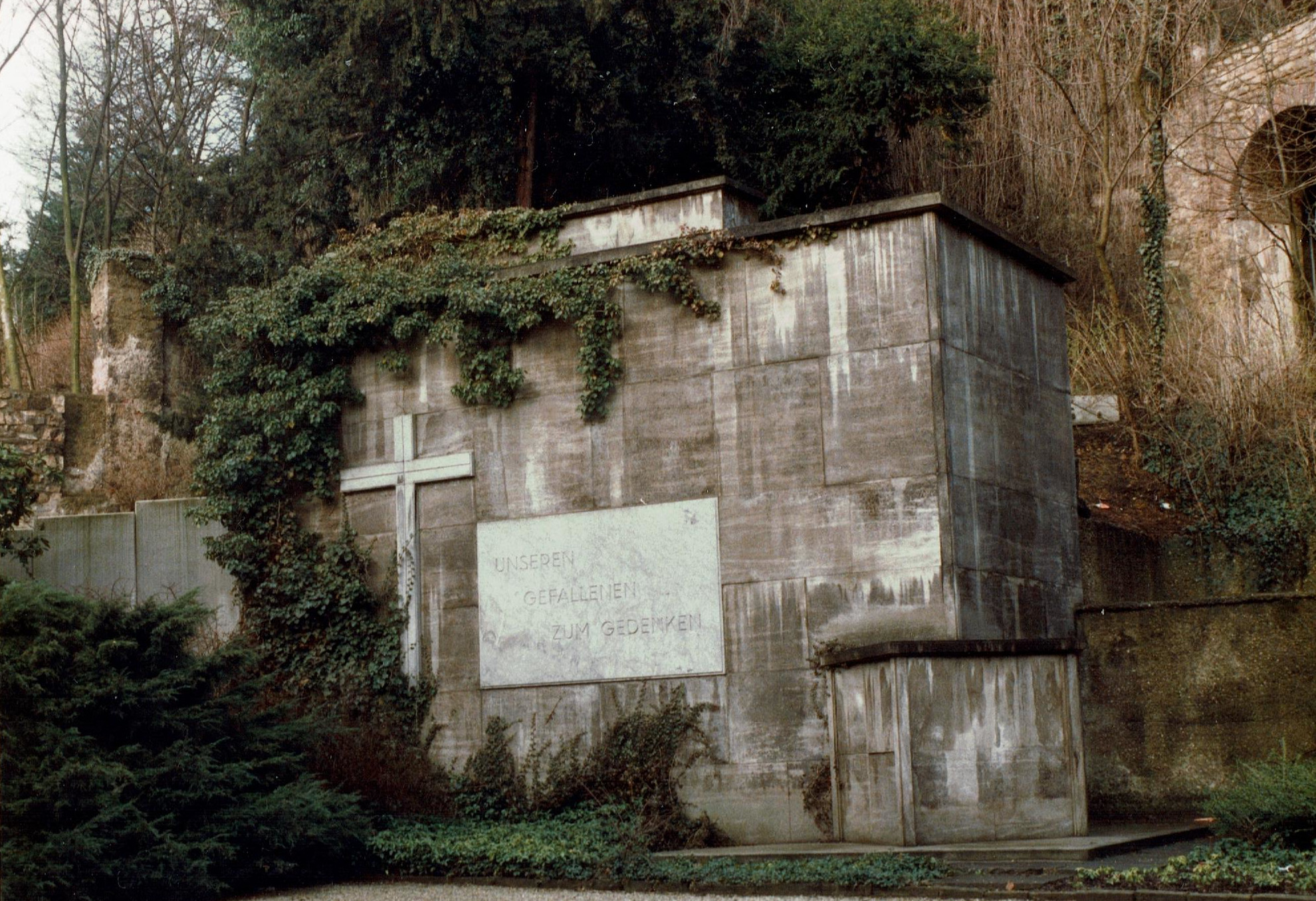 It’s only fair that the Germans would have their own WW2 memorials. This one was quite large and I couldn’t get it all in the camera view once I stepped up close to it, but farther back it was hard to see around the foliage. This one stands in the Wurm Valley near Herzogenrath, Germany.
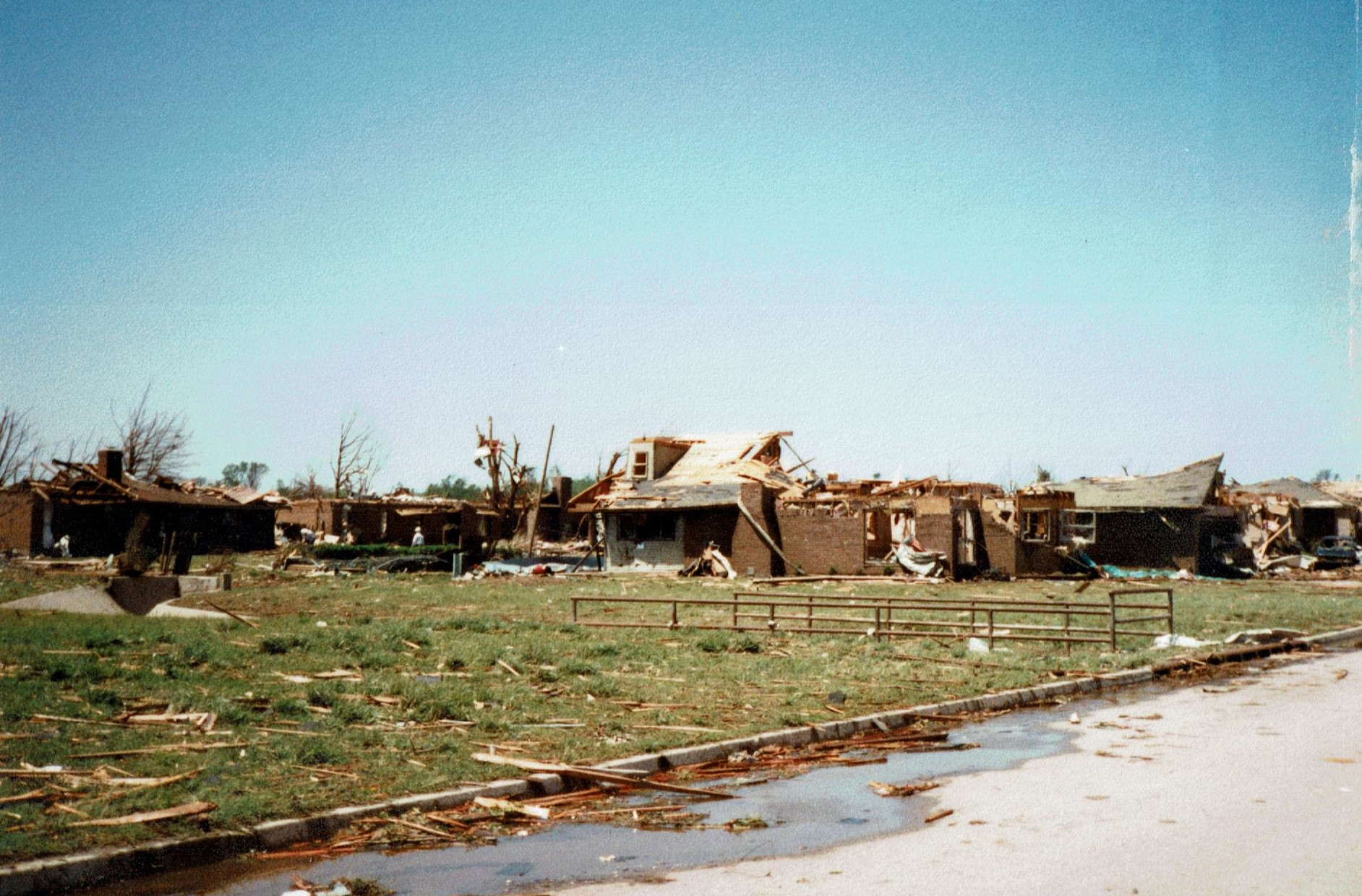 This is one of the few surviving photos I took the day after the big tornado on May 3, 1999. This picture was taken just a quarter mile from the trailer house I rented at that time. We were on the Midwest City side, and this neighborhood was on the Del City side of Sooner Road, near SE 44th Street. After dipping down several times starting in Chickasha, the tornado path started in earnest in Moore, and was several miles long. It nipped across the corner of Tinker AFB before it lifted a couple of miles north. While we sat in the shelter, it shook the ground and the sound reminded me of standing in the blast from very large jet engines.
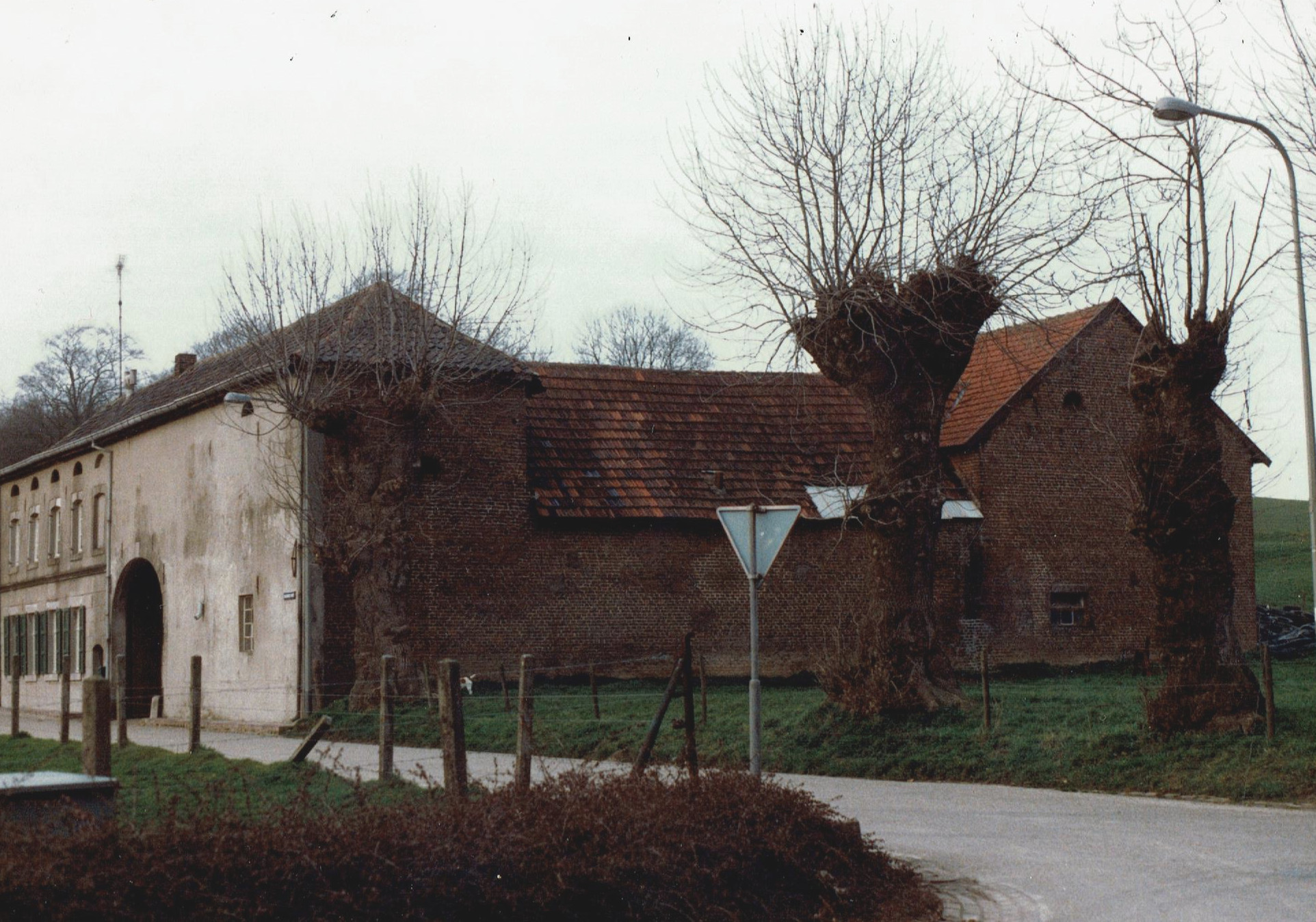 I always loved looking that this old farmhouse that stood on the northern edge of Oirsbeek, Netherlands. It was on the path I often took for jogging, leaving my house in the same village and heading north into some hills.
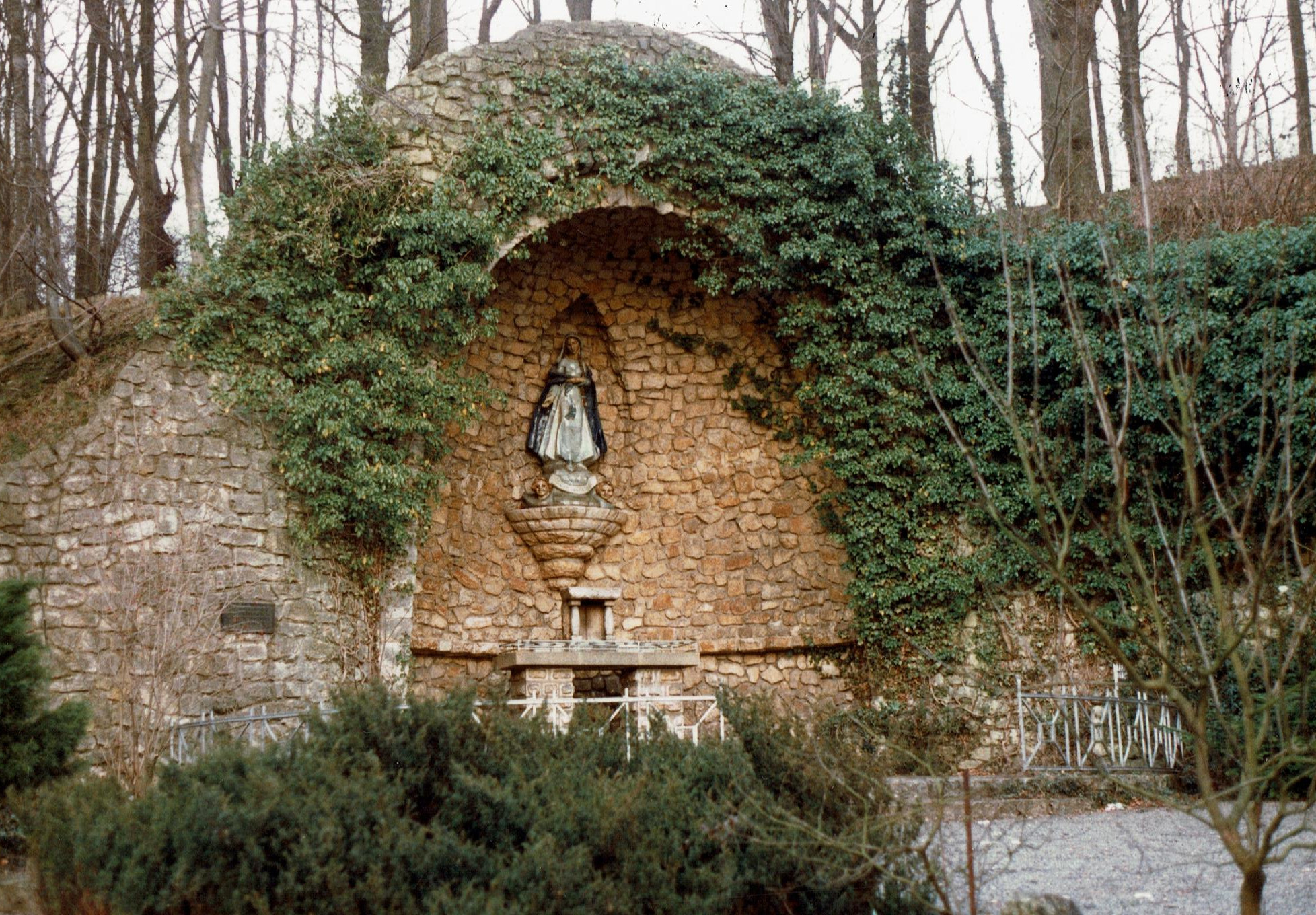 My memory is fuzzy, but I seem to recall this chapel was on the same road. However, I do know it stands within a few hundred meters of the farmhouse, wherever it was. There was at least a couple of annual community services held here and it was quite a lovely plaza hidden in the trees on a hillside.
Here at Kiln of the Soul parish, our religion is otherworldly. The proper generic term is Christian Mysticism; get comfortable with that label. And if you know how to talk about it, telling other folks that’s what you are will open doors to some very useful discussions.
This is totally opposite of Judaism. While the author of this article is completely wrong about the roots of the Old Testament, he’s right about Judaism being entirely materialistic. The Jews flat out lie about the Scriptures, and most of the world buys into that lie. Hey, the early church did. Indeed, the Judaizers had a far stronger effect on the early church than most church historians want to admit.
But it doesn’t take a whole lot of digging to discover that the ancient Hebrew culture was quite otherworldly. It’s not hard to work out that folks like Abraham didn’t discuss the afterlife directly because they were convinced it was beyond human language in the first place. They didn’t deny the afterlife; they simply didn’t expect to understand it. And they did understand that whatever the afterlife was, it requires some careful choices while we are here.
The reason the New Testament talks so much more about it is simply another cultural influence, largely Persian (Zoroastrian) but also from the less Hellenized portions of the Greek-speaking world of that time. People of the Ancient Near East did not develop a repertoire of terms for dealing with the afterlife because of reverence for the unknown. That was their attitude. People farther west were more inquisitive about such things. That Jesus had no problem with discussing the afterlife shows there is no moral superiority in that particular area. It’s just a question of what people thought; it was the vernacular of His time.
The big take-away here is that we can see how Judaism gave birth to Zionism, and how Zionism tends to be so much more secular. It’s just the logical extension of a religion that abandoned its otherworldly roots. So we are just fine letting them have this world. When Christ returns it will all be gone and they will face eternity in shame. Meanwhile, our God is sovereign in this world and teaches us not to worry about what He does with it. That’s not our concern; it’s just the background against which we operate for His glory. We reject the lie of political Christianity, and we warn them they have bought into the Judaizers’ scheme. They want it so badly; they can have it. We want peace with a God who lives in Heaven.
6. Loose Ends
Biblical Law is just another term for following Christ. Covenants are a continuum from the Law Covenants up through faith covenant. The difference is how you approach it; it is what’s inside of you. The covenant that applies to you is based on your adherence to what Jesus taught, which in turn is what the Bible as a whole teaches today.
At the lowest level, the entry point is the Covenant of Noah. Right away the toughest pill to swallow for Western minds is that this ancient covenant requires a tribal social structure, feudal government and a covenant awareness. It points to the heart-led way, and this can eventually bring you to self-death. The next level is Biblical Law as Christ taught it. You cannot pursue this without a powerful sense of conviction; the heart-led way is required just to get in the door. It requires self-death on the Cross if you take it seriously.
From there you enter a faith covenant. This is utterly personal and individual in nature, though our knowledge of it goes back to Abraham. This is where Biblical Law is just the frame of reference for how to act on faith. It sweeps in all the requirements of Noah’s Covenant by default.
But the Covenant of Noah as the gateway is far broader in application; it is binding on the entire human race until Christ returns. All governments are measured against it. The provisions were inherent in Acts 15, but they can be listed:
1. No idolatry.
2. No abuse of God’s name (blasphemy, cursing, etc.).
3. There must be law enforcement against those who threaten social stability. This includes the death penalty for grave threats (see the Law of Moses for examples).
4. No unjustified taking of life, human or otherwise (all living things).
5. No sexual immorality: incest, adultery, bestiality, homosexuality, etc.
6. Respect for property ownership (to include the feudal system).
7. Blood is sacred; all flesh must be drained before cooking and eating (raw is generally forbidden).
The whole idea is not the restrictions, but the broader pattern of respect for God and His design. It’s a matter of tendencies, not hard and fast rules. The first step is to stop looking for loopholes. The actual wording may vary when you see it discussed elsewhere, but the underlying principles are easily understood. Any human government that fails to embrace these provisions is just another cattle herd in terms of how God deals with them. They receive no covenant blessings on any level, and they cannot be taken too seriously. Their fate is entirely a matter of God’s convenience.
On the other hand, we are generally forbidden from interfering with the Lord’s cattle herding. We are to infiltrate human institutions for the glory of the Lord, not to change the political situation. There are times when we will participate in whatever governments do, to include military service and perhaps even supporting a rebellion. You do so with the greatest of care and soul-searching. You participate only because that’s what God requires of you via your convictions, not because it might succeed at any particular goals. You jump in with full commitment of your fleshly life and don’t worry what people think about it.
But for the most part, we never take seriously the idea of changing a human government. Nothing of lasting importance happens there. Feel free to prophesy if God puts the burden on your heart. Give wise advice about specific issues based on revelation. Petition for redress of grievances if that’s allowed, but don’t expect much. Don’t get wrapped up in thinking some agency owes you respect or anything like that. The concept of rights is contrary to Scripture. All dealings with God’s cattle is a matter of heart-led truth and tactics. Don’t take yourself too seriously; do what the Lord commands in your heart simply because He commanded it.
God intended for the human race to live in small tribal clans. There is a right way to do imperial conquest, but it’s fundamentally evil in the long run. No one should have any say in your daily life unless they are related to you by blood or covenant. We also know beyond all doubt that no government will ever take such a thing seriously, so we can easily predict that God’s wrath will fall on every human government sooner or later. Our only real hope is that we can get our churches to organize on these principles and hope the human government won’t interfere overmuch.
We hope that outsiders will see our conduct mostly in terms of Noah’s Covenant; that’s as much Biblical Law as they can understand most of the time. But people who have been spiritually born have no excuse for failing to embrace the broader Biblical Law of Christ, never mind a genuine covenant of faith. The whole purpose of this book was to put Biblical Law and the blessings of Christ’s Covenant — the shalom heritage of the children of God — within easy reach.
We aren’t building a denomination or a new religion. We hope simply to create a parallel society that acknowledges the full revelation of Jesus Christ. Such a society will emphasize the heart-led way and the continuity of law and grace in revelation.
============
This is the end of the series, and the whole thing will be made into a book soon. This is your last chance to comment or request clarification.