Teaching Experiment: Earthquakes 3

Our hand-n-arm model in the previous lesson oversimplifies things, of course.

If you went out to the subduction zone off the southern shores of Alaska, and took a submarine down into the ocean to look at it, you wouldn’t see much. The ocean floor is covered in silt and other sorts of debris. What you would see is that muddy bottom dives deep into what we call the Aleutian Trench. It’s the spot where the two tectonic plates come together as the North American plate rides up over the Pacific Plate. While the Pacific is shoved down, it curves down a bit, but the ragged edge of the other plate is curled under. The top layer of the earth’s crust, at least in Alaska, is much stiffer than what’s below it. You aren’t likely to see the glacial movement of the earth’s crust because it’s such small increments over such a massive scale.

Sometime over the past few centuries, there was a 600 mile arc where the two plates caught on each other. The pressure began to build. It works best if you envision that state of Alaska as one massive stoneware plate. If you actually spent some time in Alaska, you could readily see that the whole state is just a bunch of mountains with a thin cover of alluvial deposits here and there. The thickness of this underlying stone shield varies, as does the density and composition, but it’s still pretty much one big piece. On that massive scale, it can flex a little, but not much.

As the southern edge of this stone shield was pulled under, it didn’t curl easily. The stress was spread northward more than 300 miles. So for a couple hundred of those miles, the surface of the stone shield was bent down lower than normal. A hundred miles or so farther north behind that dip, it was bulging upward. This big plate wasn’t quite stiff enough to tip the whole thing up off the earth’s mantle, but the pressure was trying to do something like that. The rest of that massive stone shield was just too heavy. Sooner or later, something had to give. Instead of popping loose at the edge where all the action was taking place, it broke up in the deepest corner of this arc.

That break was just enough to let the pressure off so the plate could shift around just a little. The part that was bent down came loose from the catch and popped back up to its normal place, and the bulging part farther back from the edge fell back down into its normal place. That explains the image here that I borrowed from the USGS, mapping some aspects of that Bad Friday Earthquake. You really should click on it to get a closer look at the details (CTRL-click to open it in another browser tab). The red star over Prince William Sound is the breaking point, the epicenter of the actual earthquake.

American colonization of Alaska took place long after this pressure began building. They invested a lot of resources in infrastructure that was actually resting on a time bomb they couldn’t possibly know about. So from their point of view, a big chunk just popped up out of nowhere, but the part they were living on is what dropped down. It made a terrible mess of all that stuff they had built on the Alaskan rock and soil. Anchorage was the biggest improved area in those parts, and it suffered massive damage. It’s not that the rest of this area didn’t see some radical changes, but so very much of this state is not actively used by humans, so you aren’t going to read about the parts where people rarely set foot.

As you can see from the map, earthquakes don’t always center right on top of the subduction zone where you might expect them to be.

Posted in teaching | Tagged , , , | 1 Comment

Teaching Experiment: Earthquakes 2

Image 1

The Tectonic Plate Theory is a good working model. It doesn’t account for everything, but it will get us where we need to go with understanding the Bad Friday Earthquake of 1964 and earthquakes in general.

Most major earthquakes are associated directly with the boundary lines between tectonic plates. There are fault lines all over the middle of these plates, but most of the serious threats to human life are associated with where the separate plates touch each other. We have a simple hand and arm model to illustrate how this all works for our purposes.

Image 2

Raise your arms in front of you and bend the elbows so that your hands come near each other in front of your body (image 1). Fold your fingers so your hands form fists. This reminds you that the edges of the plates are massive and blunt, many miles deep. The vertical face of your fists represent something like 60 miles of earth’s crust. Pull your fists apart just a tiny bit, then bump them together gently a few times. The pressure between the various tectonic plates can be unimaginable. In the case of Alaska, the state is part of the North American Plate, and the Pacific Plate is pushing up against it from the south. Something has to give.

Image 3

Now push one fist down below the other (image 2). Off the Alaskan southern coast, it is the Pacific Plate that is diving. It’s pretty much like that all around the Pacific “Ring of Fire” — that is, those areas along the Pacific Plate edge where there are volcanoes. All the other plates are riding up on top of the Pacific Plate to create those volcanoes and earthquakes. Now push your plates together a little farther until your upper hand reaches the opposite elbow (image 3).

Image 4

There’s an awful lot of crust being shoved down until it starts to dissolve in the molten liquid layer below. We call this a “subduction zone” and it has a pretty standard set of features wherever it happens. Wiggle the fingers on your upper hand (image 4). That’s where we have earthquakes, where the two crustal plates build up pressure, and occasionally slip in sudden jerky motion. Now wiggle the fingers on the lower hand (image 5). That’s the roots of volcanoes. So you’ll typically find volcanoes sprouting on the high plate somewhere near the subduction zone.

Image 5

The location of the volcanoes represent the approximate leading edge of the plate behind shoved down.

Now picture this dynamic taking place most of the way around the Pacific Plate, thousands and thousands of miles long. Our hand and arm model was just a tiny cross-section.

Posted in teaching | Tagged , , , | Comments Off on Teaching Experiment: Earthquakes 2

This Life Is Death

I want to refresh the logic here on something. Our American culture stoutly militates against the truth.

Creation is not fallen; mankind is fallen. We were designed to be eternal creatures, placed in a Garden where not much else lives forever like that. We ate from the Tree of Life. But by tasting the Forbidden Fruit of the Tree of Knowledge, we lost access to the Tree of Life. We died that day, in the sense that death became a part of our existence.

So now we have mortal flesh. A part of that mortality is a radically different perception of Creation. The parable language of the Creation story breaks down if you try to make it literal — it’s not that we physically left the Garden of Eden, but that our souls departed a life where we had full communion with the natural world. It’s not a literal place, but a condition. We aren’t capable of actually perceiving reality as God made it; we are stuck with relying on our intellects and sensory data. Those aren’t enough to tell the whole story.

But we are born with that crippling perception tied to our mortality. So we experience time and space as restraints, for example. And instead of being managers of God’s Garden, we are forced to experience the mortality that is natural to the rest of the Garden. Except for us, it’s not “natural” — and some part of us knows this. It’s frustrating and it ensures we know that we are under the curse.

God placed the Flaming Sword of Truth at the entrance to the Garden. In less symbolic language, He has placed within our reach a revelation of His divine nature so that we can return to some measure of our lost eternal perception. It’s a halfway measure that gives us a taste of what we should have been, and what we will be sometime in the future when the Lord comes to restore all things to their intended place. The Flaming Sword of revelation obviously means dying, but death is a symbol on multiple levels. You can embrace the Sword by choosing the death of this fleshly perception, and awakening the heart-mind we all have. The heart-mind is the faculty that perceives moral reality, more or less as God made it.

But we are still caught between these two kinds of existence. We still have the flesh, but we become dimly aware of eternal reality. We can exercise the truth we know from the heart, but we still have to struggle against a very powerful resistance from the flesh. This is very annoying, very wearing on our souls. It’s supposed to be that way. It’s supposed to make you long for the Garden of Eden again and the Tree of Life.

Our life in this flesh is not precious. Do you not see how the mythology of our Western Civilization has filled us with some kind of greedy, fearful hoarding of time and this miserable fleshly existence? That damned Western epistemology, the assumptions about the nature of reality that reject revelation and God’s truth, that demand we shut off the heart-mind and listen only to the fleshly perception — do you see how it perverts everything? Life in this flesh is not precious! It’s a hindrance to our divine eternal destiny. We should be eager to break free from the flesh and experience unhindered full communion as eternal beings back in the Garden.

The only reason we remain here is because, once the Flaming Sword has entered our lives, we are supposed to participate in what it does. We share the revelation with others; we seek to help awaken the heart-mind awareness of others by showing off our freedom and joy, even as we live in this flesh. We aren’t fearfully clinging to this existence; we are rightfully rather bold about pushing the envelope of what keeps us alive, ready to pass on to Eternity. We trust our heart-mind awareness to point out the obedient limitations so we don’t sin by jumping the gun and leaving this life too early. We have a mission calling, so we persevere in the name of our God.

In the meantime, a part of the Flaming Sword is sharing it with others who have the same heart-mind awareness. It’s a taste of divine communion to bind ourselves together under that revelation, to seek the comfort and support of others as we endure this sad existence. And we mourn when someone else gets to go free and we are still stuck here. We mourn the loss of that sweet fellowship, not their passing. We celebrate their release from this flesh.

So we don’t get riled up when folks we don’t know die. We can understand how much it hurts those still alive who loved them, but death is not a tragedy. It’s release, the final goal to which we are all working so hard for Christ. And mass death events from natural disasters don’t upset us; that’s no punishment from God. It’s their final release. The punishment is living this awful life under the Curse. We can have joy in this life, but it’s a taste of something beyond. Whether any of them actually had favor with God and entered eternity as His children is another question, one we actually cannot possibly know. The most we could possibly know is whether it seems to us someone exhibits the joy of heart-led living.

So pretending it’s a tragedy if they haven’t embraced Western cultural Christianity is just goofy arrogance. Ditch that sentiment. The only tragedy in death for an individual we know is if they appear to die without having experienced heart-led birth into that moral awareness. That’s a separate issue from whether they “went to Heaven.” We need to shatter that bad mythology about “being saved” and “going to Heaven” — those phrases never meant in Scripture what they appear to mean in American Christianity. People who die before the Return of Christ are ushered into the household of God. Some are His children and they get to rest until human history has run its course. Others are there as His enemies, and it’s not at all pleasant for them.

But it only gets worse for His enemies once the final restoration comes. It’s a tragedy we cannot possibly comprehend, and so long as we are in the flesh, we have no way of knowing anything about it. We have Scripture loaded with symbolic imagery of what that’s all about, but that’s just proof we can’t comprehend it. So there’s not a damned thing we can do about that, and while the Bible says that, Western readers insist that there is a procedure that’s pretty much the same for everyone. That’s the perverted thinking due to reason and myths like democracy. Whatever it is that makes us children of His household, it’s like birth and DNA — it’s unique and totally individual to each of us.

So while we live in this fleshly body, longing to get out of it, a part of our swinging that Flaming Sword of truth around is our kindness and compassion. Not “being nice” as Westerners define it, but as the Bible defines compassion. We invest as much expertise in helping people die as we do how to live. We want to usher them across the boundary into Eternity, waiting on God to signal in our hearts what’s the best way to do that. Sometimes it’s supporting this life a little longer and better, which typically means helping them harvest the fruit of heart-led communion with Creation. But if it seems in our hearts that we know they are dying, let’s help them do that with grace and compassion.

Preserve human life? Sanctity of life? No, damnit! Preserve the mission; that’s all this life is for in the first place. The mission comes first and human survival is a minor concern. Divine justice takes precedence over survival. If an infant is aborted, that one goes to Heaven right away because the full impact of the Curse is delayed until some invisible point of development in the consciousness of the soul. In fact, we can’t even come up with a proper image of it because our brains insist on thinking of time as a boundary, which it isn’t. We can’t know when the Curse takes hold, but we can see it later in how a young human acts. But until then, children are innocent and go to rest with the Heavenly Father at death. He’s the only one who knows where the boundaries are on that.

Stop investing emotional sorrow in the death of a fleshly mortal body; death is just nature. Be sorry you don’t have their company any more, if you enjoyed it. And if you don’t miss them, be mindful at least that someone somewhere probably does miss them. You can’t poke the Flaming Sword into someone’s life without being sensitive from the heart about their perceptions of things. Ditch all that manipulative language about people’s feelings; that’s a false trail. Be aware of how you can help or hinder their progress toward the heart-led way, but their feelings don’t account for much. Nor do yours, in that sense.

Don’t fear death. Be mildly sympathetic to those who do, but make it clear you don’t share their dread. This fallen, cursed existence in the flesh is not precious. It’s only so useful as it helps bring glory to God so that folks will go looking for the Flaming Sword and leave this life for Eden.

Posted in teaching | Tagged , , , , , | 1 Comment

Teaching Experiment: Earthquakes 1

Just as an exercise, I wanted to share some of my education in the mechanics of earthquakes. I’ve never seen it offered anywhere else this way, particularly in public education. It seems it always has big gaps in it, so no one remembers much because they really didn’t get it. Much of this is based on my research into the Bad Friday Earthquake in Alaska in 1964 (it’s a play on “Good Friday,” the day it happened). My family moved to Anchorage just a short time after that, and it intrigued me all through my adult life. I really wanted to understand the devastating aftermath that we saw when we arrived there. It turns out it was one of the best studied earthquakes ever, because it was about the first time the full array of modern equipment was available and listening.

That has to do with a little bit of history regarding nuclear weapons. This was not long after a string of treaties established a global network of seismographs so that the treaty partners could keep an eye on each other, to make sure no one was cheating on the nuclear test ban. It turns out that, not long after all that equipment was in place, one of the biggest earthquakes in history hit Alaska. It wasn’t just a shake or shock in one spot, but a vast stretch of fault-line (some 600 miles) shifted all at once, lasting four and half minutes. Somehow, the US and state governments, along with international academia, mobilized a small army researchers to go out and survey the damage with the best technology available at the time. I’ve seen the product of this research that was published; it’s a large bookshelf of volumes in loose-leaf binders that would take countless hours just to read, assuming you could understand it. I don’t believe any earthquake since then has received so much attention, in part because that one in Alaska established a new and very broad baseline against which other earthquakes are now understood.

This will be one bite at a time, building from what my experience tells me is more-or-less common knowledge. I’ll try to find images I can use, or link to, but I’ll rely more on what is likely a unique approach to explaining it. First, let’s take a quick review of a basic physics principle, because it’s critical for something later. I’m going to oversimplify, so humor me.

You’ve heard of sound waves. It’s common for them to be illustrated in profile, or as waves rippling across the surface of water. Those can be misleading, in the sense that it doesn’t get at the actual physical nature of what it is. A sound wave is just a label plastered on an event well understood in physics: it’s a compression wave. Smack two objects together. The impact will compress the molecules, at least on the surface of the two objects (depending on how hard the material is). Let’s keep this simple and pretend it’s two fist-sized stones of granite. The molecules won’t compress much; it’s movement down on a molecular level. But the rebound will affect, say the air molecules around it. They’ll be jostled by the by the impact and rebound. They will in turn jostle the adjacent molecules, and those will jostle others.

This jostling isn’t random, but takes on a pattern. It erupts outward from the source, spreading by jostling in a spherical compression wave. It’s that molecular compression and rebound propagating through the air. When the compression wave hits your eardrums, it registers as sound. Of course, in the open air, the intensity of the compression wave reduces over distance (the fancy term for that is “inverse square law” — see this for an illustration of that).

Now try the same stunt under water; pop those two rocks together. You still get a compression wave of molecules jostling each other, but now it’s liquid water instead of air. It’s a little slower. If you happen to do this with part of your torso in the water, you’ll feel it before your ears hear it as the concussion propagates out of the water up to your ears. Or, if your head is underwater, you’ll hear it when you feel it. But you’ll feel the greatest impact of this compression wave in your stomach. It may even make you briefly nauseous, because your guts don’t like that kind of thing. But your stomach is a relatively large cavity of differing density from the rest of your body, so it registers there like it does with ears in the air. The difference in the rate of travel is why it’s unpleasant.

Air and water tend to be uniform in density for these experiments. The earth’s crust is not uniform like that. What if I could somehow slam those two stones together while they are inside solid ground? Once again, don’t think of it as a ripple across the surface of water. It’s not a vertical shift; it’s a compression wave that shifts molecules by briefly compressing them. It propagates outward because they snap back and pass it on. The compression wave propagates outward in a sphere until it meets some resistance. In the ground, that typically means a change in soil composition or a body of water, or something else. The compression waves can be bounced, and can be focused by rebounding off harder materials, intensifying the effects. It’s not just a simple matter of losing intensity gradually as it would be in the air. A compression shock wave is a critical element in understand the damage earthquakes do.

Posted in teaching | Tagged , , , , , | 3 Comments

No Apology; Nobody Listening

There’s a lot of noise about defending Western Civilization as Christian. It’s not Christian, of course, but Western Civ has provided the platform for hijacking the label “Christian.” None of these scholars defending Western Civ wants to explain how a Hebrew man defending ancient Hebrew mysticism is the founder of what passes for rationalist Christianity in the West. Somehow the doctrine of Christ was wholly replaced by Platonic-Aristotelian logic filtered through heathen Germanic mythology. As I’ve often tried to show, seizing the words of the New Testament and filling them with that wild mixture of nonsense was pretty much the same as the Jews gutting their Hebrew Scripture of its deep mystical traditions and filling it with Hellenized rationalism.

Without apology I assert that Western Civilization has done more damage to the gospel message than any other identifiable force in human history. It has so dirtied the name “Christian” that I hesitate to use it in some settings. But we aren’t hostile in the sense of trying to destroy Western Civ. That job has already been done; Western Civ has always borne the seeds of its own destruction. Those seeds have germinated, grown, and the crop is about ready to harvest. The West is almost dead and gone.

What follows it will probably be worse. It remains for another generation of heart-led mystical believers to discern the flaws of that, but good riddance to the West. It will be painful and destructive on Western folks because the West has been so painful and destructive to everyone else. When Jesus talked about worshiping Mammon, He was characterizing the influence of Hellenism on Hebrew religion, and it’s the same rationalist materialism that characterizes the West. I will not be shamed for my prophetic warning that this is going to hurt, and justly so.

Meanwhile, precious few are those who hear and repent. There’s no arrogance or pride in that. We are filled with sorrow that no one listens, but no has listened over the centuries since Jesus warned His own people not to go down that Hellenized path to Hell. We watch has billions of souls pass by every opportunity to seize their own divine inheritances. Paul says the Creation itself mourns that very thing, so we cannot avoid joining in the dirge.

Lord, please allow us to rescue a few.

Posted in Uncategorized | Tagged , , , , , | 3 Comments

Extravagance Is Not Shalom

Cruising the Christian News sites, I see the current big money items.

1. Vanity toys: Can you take him seriously? I prayed for a bicycle, and before that a used car for my working wife. That doesn’t make me holier, but I can guarantee that there’s no way we would use money for such things as personal luxury aircraft, even if it was offered. I’m not worried about the demons on mass transportation, but the bogus security theater called TSA.

2. Anti-abortion campaigns: I agree abortion is taking a human life, and it’s typically done for sinful reasons. However, I don’t approach it from Anglo-Saxon tribal law, as America does. I approach it from Biblical Law, which is radically different. A woman is responsible to God and her husband for her child’s welfare until it’s weaned and other people start having to invest care and resources in that young life. Yes, the Bible presumes an extended-family household, but God never granted the clan-tribal authority to any secular state. The issue is that only folks related by DNA or covenant have any say in the matter. So a child’s survival up through weaning is by no means the state’s business, nor that of strangers with no vested interest (that’s not just a financial interest, either).

3. Lawsuits: By the same token, we shouldn’t fight every little thing the state demands that we don’t like. It’s like poking a stick in an ogre’s eye — get ready for the bludgeon. All the more so when you live in a near-communist state like Oregon, it’s foolish to make trouble by rejecting government/community demands when you are engaging in public commerce. A lot of Christian activist money and resources were wasted on a lost cause; there’s nothing noble about that.

There is some better news, though. New collections of fragments of the Dead Sea Scrolls have been turned over to scholars. An effort to decipher some of the encrypted Hebrew among these recent finds reaffirms something in Scripture (Leviticus 26:3-12 defining shalom) and in our teaching with perhaps an older version of the text. Also noteworthy was fresh support for Nehemiah, something lacking among the Dead Sea Scrolls previously.

Posted in religion | Tagged , , , | 4 Comments

Sandy Trails

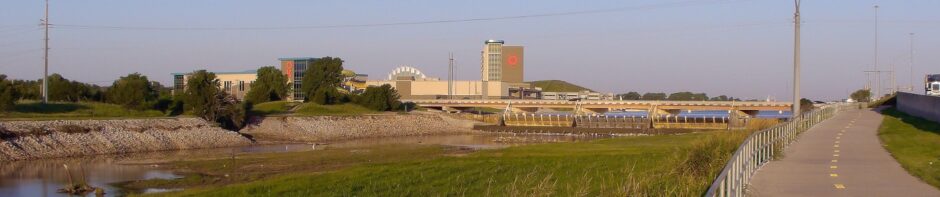
Took a ride yesterday to one of my favorite prayer chapels, the mouth of Crutcho Creek where it empties into the North Canadian River. Given the cold weather and lack of moisture, the river is way down, still cradling patches of ice in low-flow areas, and the trails along the banks were exceedingly dry and sandy. So it was a really good workout just trying to stay in the saddle in some places. This alluvial silt doesn’t cohere very well without a binder of some sort, like grass or maybe just enough water to keep it from being too muddy.

I didn’t realize trouble was brewing in my guts. I’ll skip the gory details but something I ate in the past 48 hours placed a time-bomb in my digestive tract. All it took was a failed attempt to boil down some wild blackberries into a slurry. I got the consistency I wanted, but there was something in it that my stomach couldn’t handle. For the first time in 50 years I lost my cookies, and I don’t even eat cookies any more. But it tasted like burned bacon. Since I seldom eat bacon at home, I knew it had to come from our meal at some new diner we checked out.

So today I’m not doing that well and it interfered with our weekly home worship. But looking back through the images I took was a peaceful re-acquaintance with the sweet moments I spent out there on the river. I didn’t catch them on camera, but a couple of fellows with fishing gear waded across that icy water between sandbars to a fishing spot where the river bends and the sandbar is really high and dry on the inside of the curve. They did their wading with pants rolled up; the ambient temperatures were above 60°F, but that water was not too far above freezing. They hooted about it a good bit.

After a while of communion with God and His Creation, I headed back upriver along the south bank on the trail I first encountered as a mud-bath a couple of years ago. There were a few reliable mud pits, but it was passable for my bike through the heavily wooded part starting at Midwest Boulevard and riding west. Once I got out into the open section about half-way around, it was somewhat pulverized by four-wheelers and such, so I often had to dismount and walk my bike. But it was still a good workout prior to getting sick.

This last shot was taken about halfway between the bridge and my prayer chapel. I include it only because I found it eye-catching, despite being a little repetitious.

Posted in Uncategorized | Tagged , , | 3 Comments

Sermon on the Mount 16

Just Ask 7:7-11

First, we must establish that ask-seek-knock are ancient common images of prayer and worship in Hebrew culture. In this context it should be painfully obvious we aren’t talking about mere hedonistic comforts. The whole point here is that Jehovah is not inaccessible. Jesus revitalizes the ancient feudalistic imagery of coming before your own tribal chief. What would be the standard protocol of coming before your feudal master, who happens also to be family?

In the first place, it would be an insult to Him to go to anyone else for things He has promised under the covenant of adoption as family. You don’t live and work in one man’s domain and seek your basic needs from another. The Pharisees and Scribes had sought to make the Heavenly Father seem remote and disinterested in the common Jewish peasants. Their argument would have been that it was obvious they weren’t favored by God; they were poor peasants. But since the Pharisees and Scribes were wealthy, it was obvious God favored them. Did they not have all the blessings of shalom?

No, they did not. Jesus had just finished castigating them as morally unfit (pigs and dogs), so whatever they had, it wasn’t shalom. To these abused peasants, Jesus asserts that they should restore the ancient covenant lordship of Jehovah. He wasn’t a Persian lord, remote from a conquered empire (a fashion all the rage at that time). He was the Covenant Lord who had adopted them as His children.

Therefore, they should freely come before the Lord and ask, seek and knock. God will hear; He will be found; He will answer. Then Jesus provides a rather obvious metaphor: Does any dad in the crowd know how to respond when a dependent child asks for something essential for life? He does not substitute torment or punishment for a reasonable request, but gives as much as the child can use. If we who are fallible can figure this out, doing what God commands you in the first place, surely the God who commands such mercy and compassion will practice it Himself.

Posted in bible | Tagged , , | Comments Off on Sermon on the Mount 16

Giving Stuff Away

I do this every time I have more than I can use. Typically it goes okay when I use Craigslist, but I thought I might try it here on the blog. These are free and I’ll ship anywhere in the US.

1. Dell Latitude 2120 netbook: You can look up the specs — this is the cheaper of the two versions. I thought it had died at one point, but it was a simple case of overheating. I’ve used it running Linux for a couple of years, but it has a legitimate code for Win7 on it. I’m willing to install any brand of Linux you like or try to put Win7 back on it for you. It comes with the charger, a battery good for 4-5 hours, a small shoulder bag and short-tailed netbook mouse. taken

2. D-Link N300 (DIR-615 Rev.E) home router: This is currently running DD-WRT, very secure and stable. It supports a/b/g wifi standards and it’s not too bad in a small house or apartment. It can broadcast the wifi signal through a wall or two, and outside just a little ways (I shared it with my neighbor who connected while sitting on the stairs outside our door). It has plenty of life left in it. gone

3. Linksys WRT54G2: This is not the legendary boxy blue thing, but looks like a spaceship. It’s got the original firmware to the last update. The wifi is a/b/g and works pretty good in the same room with your mobile device. It can broadcast through some walls, but unlikely more than one. gone

I can also toss in an ethernet cable for all of these if you need it. I also have stuff like keyboards, cables and whatnot. Feel free to ask questions about this stuff.

Posted in Uncategorized | Tagged , | 2 Comments

Another Unpleasant Burden

Our rejection of Western epistemology isn’t absolute; we reject the primacy of Aristotelian logic. We grasp the common standards of reason and logic. We use it ourselves, but we insist that it has limited application. Our reality is far bigger than the one Aristotle proposed. It’s not just a belief — we are in direct contact with a higher realm of existence that Aristotle denied. We insist that the heart-mind (AKA faith, conviction) is superior to the intellect, and is the ultimate source of truth and awareness of reality.

What do we say when we are faced with someone spouting nonsense that fails both the logic of Aristotle and the heart-led discernment of truth? Here we have our UN Ambassador Nikki Haley making official statements of US policy, and what she says is so preposterous it doesn’t even qualify as a lie. Nor can you write it off as insanity; she’s not deluded. She knows full well her statements turn reality on it’s head by any standard of evaluation. It’s a pernicious Orwellian intent to herd humanity directly into the pits of Hell. The insanity is her insistence that Hell is actually Utopia.

Her lust for slaughter is incomprehensible. She is a perfect personification of the Harlot in Revelation 17, representing herself as a fine church lady of American Zionist Christianity. Her message is the same as Israel’s, a troublesome little country striving to give a good rendition of the Beast. We long for the day when the Lamb overcomes this pair.

Still, this is not the apocalypse, so we will have to bear with them a while yet. But this is a time of tribulation. This is the time when, as our Lord suggested, you keep an eye on current events in case we need to get out of Dodge. Not so much in a literal sense, but we should reduce our dependencies so that our divine mission isn’t compromised when something is suddenly removed. Unlike the preppers, we aren’t expecting to hole up in the wilderness in a literal sense; Revelation 12:6 was not meant literally. It’s a warning to discern and disconnect from a system that God intends to crush.

We’ve known the UN was rotten from birth. The few rare individuals over the years with clean hands who worked at the UN were quickly expelled for hindering the corruption. This doesn’t mean God doesn’t have His servants working there, but these are people who enjoy a good rough ride and facing danger. It’s what some folks do, and they have their place in Heaven. But most of us aren’t called to that kind of thing. We have to pull back from a disaster waiting to happen.

The US is going down with the UN for the same reason; the UN is simply a manifestation of something deeply wrong with the US. It won’t matter what happens to the institution. That’s just a facility and the system that operates it. Pay attention to the kind of people involved. The bogus premise behind the whole thing is very much like the lying spirit God sent to King Ahab (1 Kings 22:19-13); it’s His wrath sneaking in the back door as a sting operation. It only catches those already committed to ignoring His Word. As the rejection of God’s moral truth becomes more bold and honest, we know it’s all about the crumble.

Writing such things is the ugly part of a prophetic ministry. The good news is sweet — I can tell you that the Lord has strong and decent people in many state and local governments. They are wise enough to see this crash coming, and are doing all they can to prepare for disaster recovery. Pray for them, even if you have no idea who they are. A great burden of care rests on their shoulders. Season your mind; start thinking in terms of putting more trust in things closer to home. Seek a sense of peace that you reside in the place God wants you — this is a critical element in Biblical Law. Creation is far more supportive if you are where you belong. Then ask the Lord to open your eyes of discernment as to whom you should trust and on what terms. Whatever good that is salvageable will be in their hands.

Posted in prophecy | Tagged , , , , , | 5 Comments